Pantera™ Lux™ Coronary Drug-Coated Balloon (DCB) is indicated for balloon dilatation of coronary arteries in patients with:
- in-stent restenosis;
- de-novo lesions;
- acute coronary syndrome (including STEMI and NSTEMI);
- small vessel disease;
- bifurcations;
- and diabetes mellitus.a
Pantera™ Lux™ DCB stands among the DCBs with the most extensive range of indications.e,16
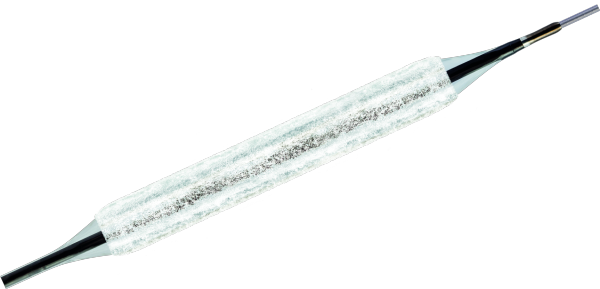
Product Highlights

Clinically proven solution
For in-stent-restenosis and further indications2
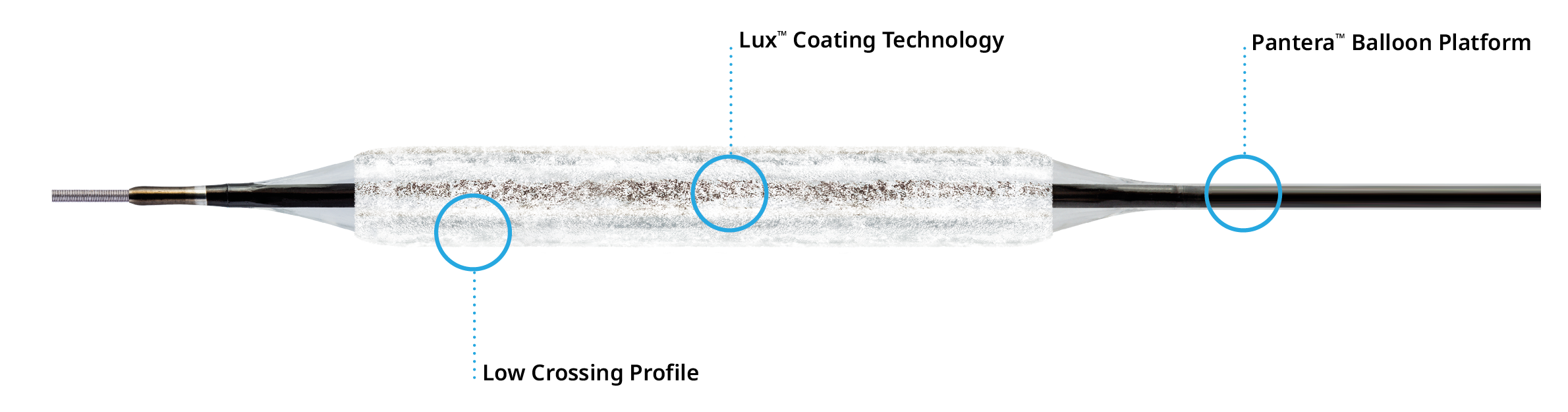
Lux™ coating technology
For rapid drug absorption3

Excellent deliverability
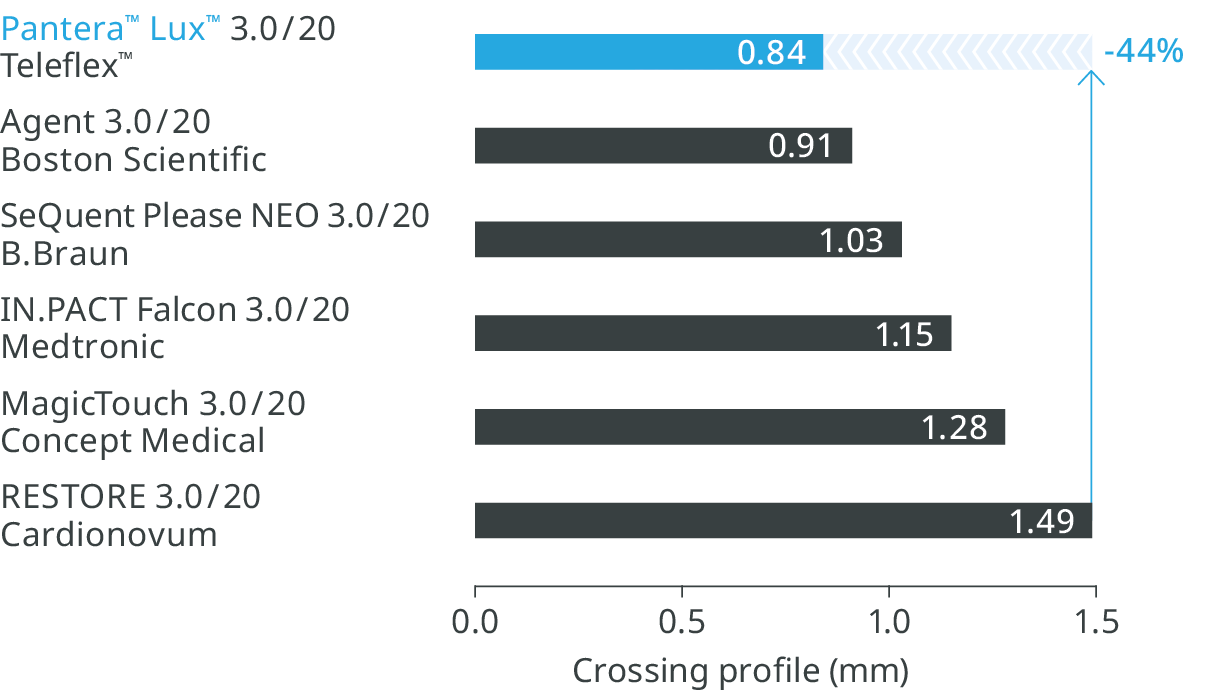
Lowest crossing profile for better push and easier cross1
Clinically proven solution
Clinical outcomes from multiple studies including randomized controlled trials like BIOLUX RCT, ISAR-DESIRE 4 and PEBSI show high efficacy and safety for both in-stent restenosis and de novo lesions.4-9
More than 4,500 patients treated in clinical studies 10
Pantera™ Lux™ DCB has proven efficacy and safety in multiple clinical trials investigating coronary drug-coated balloons for various implant-free treatment options.5-8; 11-15

Target Lesion Failure (TLF) rate
at 18 months (p>0.99)
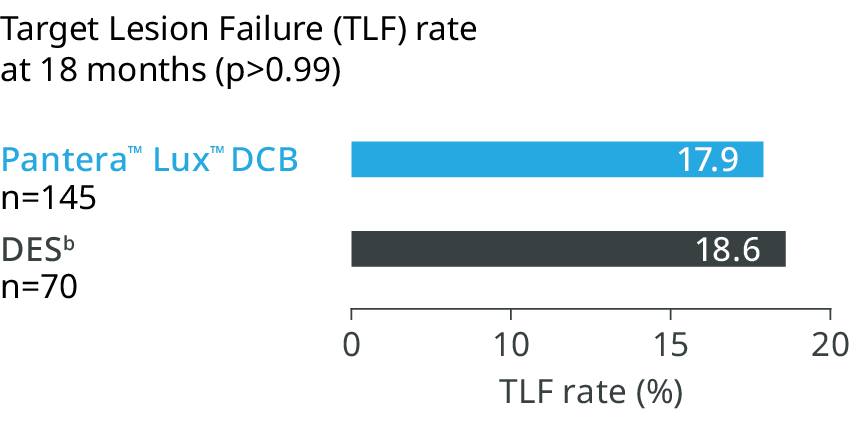
BIOLUX RCT (n=229) 8
DCB is confirmed as a viable treatment option for ISR with the advantage of avoiding an additional stent layer.8-9
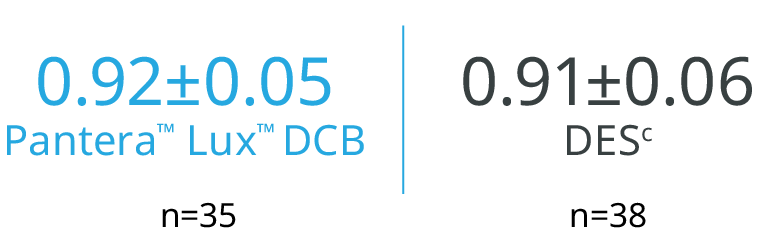
REVELATION (n=120) 13
The treatment with Pantera™ Lux™ DCB may represent a valuable alternative strategy in selected STEMId patients undergoing primary PCI.13
Mean Fractional Flow Reserve (FFR) rate at 9 months (p=0.27)
Lux™ coating technology for rapid drug absorption3
The Lux™ coating technology blends paclitaxel with BTHC, a rapidly metabolized, safe and biocompatible excipient, thus improving bioavailability at the target site.2-3
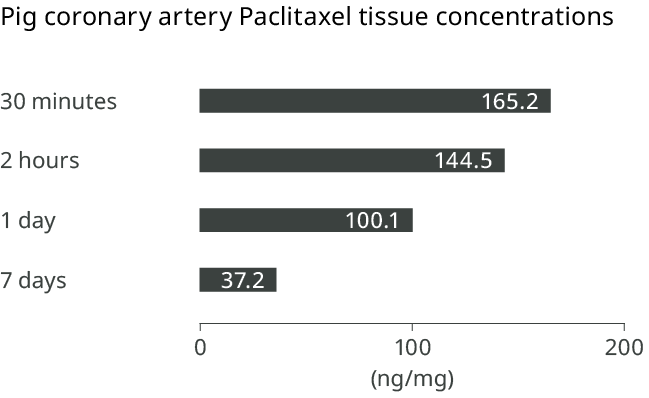
Prolonged tissue retention at the target site2-3
Following one application of the Pantera™ Lux™ DCB, paclitaxel can be readily detected in the treated region beyond 7 days in animal tissue.2-3
Excellent deliverability1
Pantera™ Lux™ DCB, with its lowest crossing profile, provides better pushability and easier crossability.1
Lowest crossing profile 1
Pantera™ Lux™ DCB has a 44% smaller crossing profile vs. RESTORE™1.
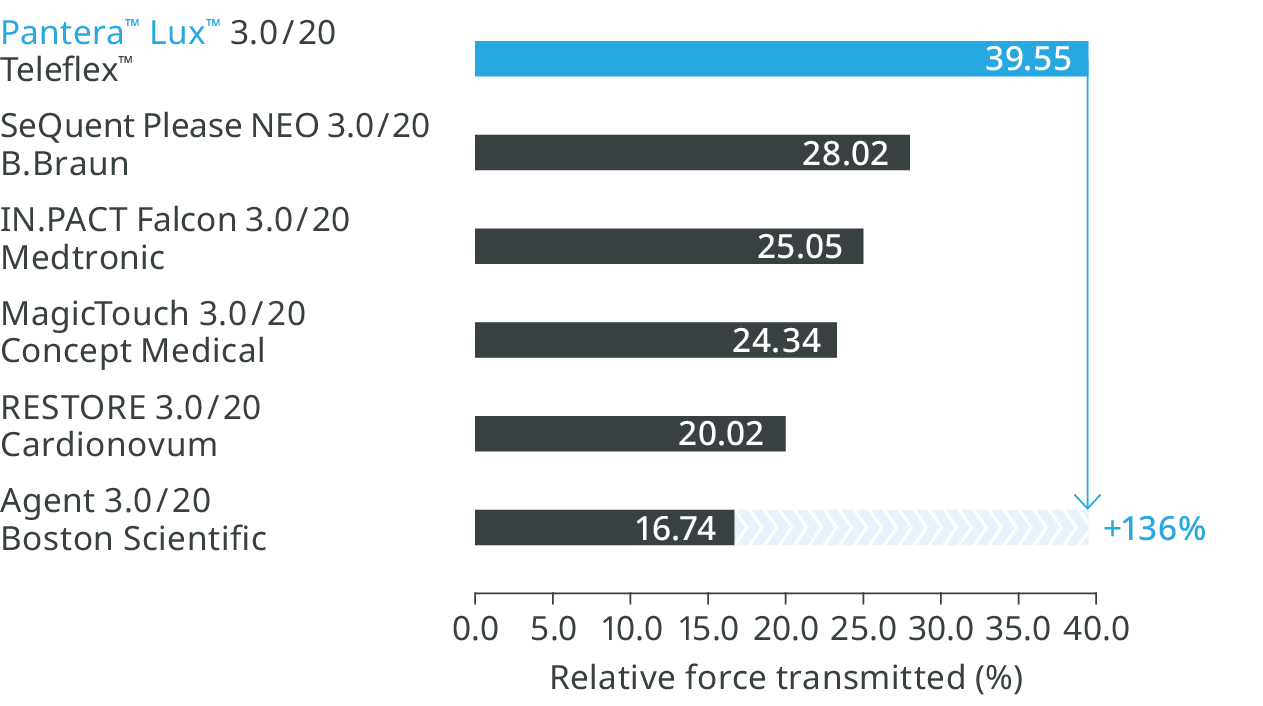
Better pushability 1
136% more force transmitted from hub to distal tip vs. Agent™1.
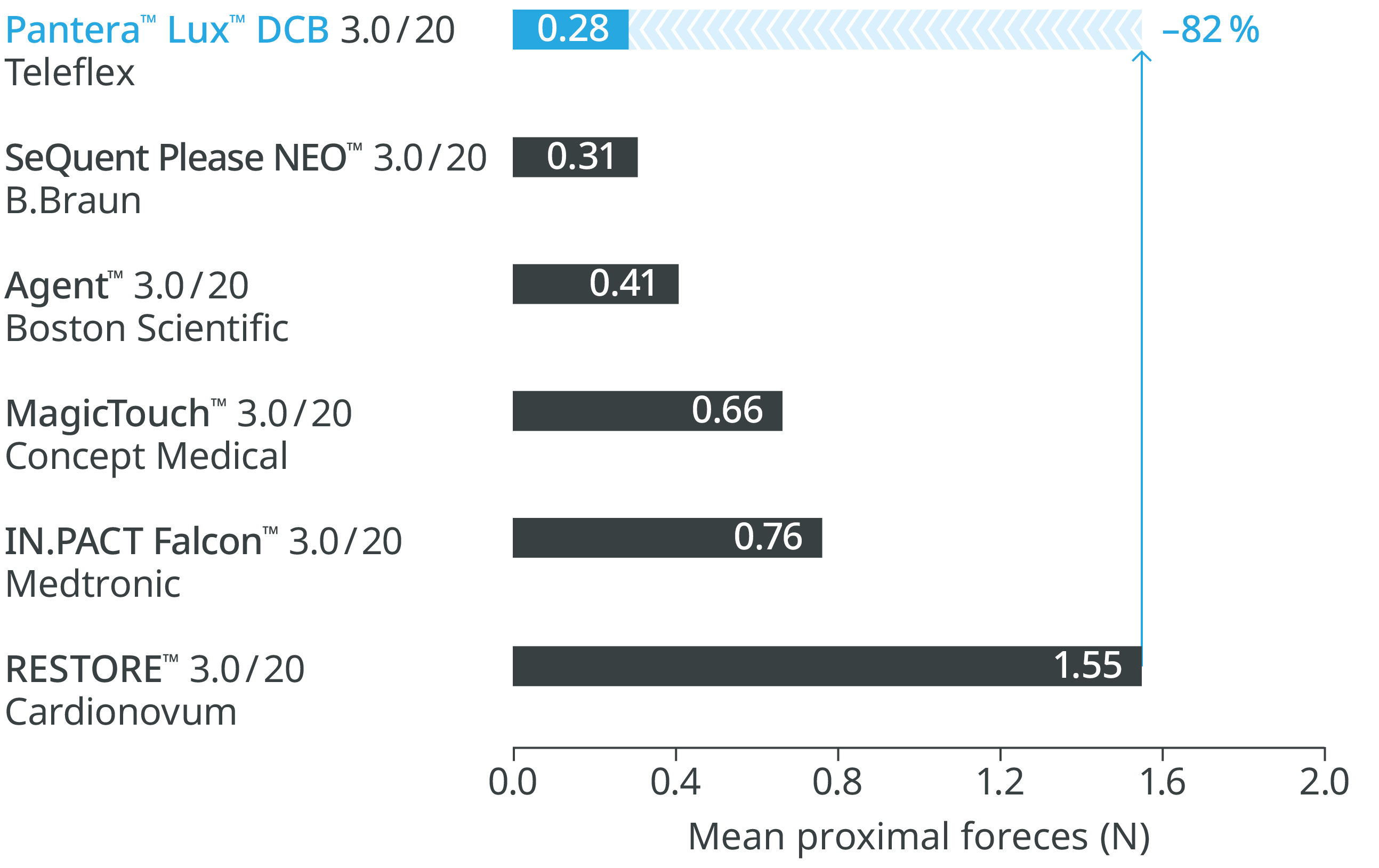
Best in class crossability 1
82% less force needed to cross lesions vs. RESTORE™1.
Clinical Highlights
BIOLUX RCT8
DCB is confirmed as a viable treatment option for ISR with the advantage of avoiding an additional stent layer
Prospective, multi-center, randomized, controlled clinical trial
See MoreREVELATION13
Excellent and comparable clinical outcome between the DCB and DES groups
24-month follow-up results from the Revelation trial comparing Pantera™ Lux™ DCB vs. 2nd generation DES in patients with Acute Myocardial Infarction
See MoreProduct Overview
| Drug-coated balloon catheter | |
|---|---|
| Catheter type | Fast-exchange PTCA balloon catheter |
| Recommended guide catheter | 5F (min. I.D. 0.056”) |
| Lesion entry profile | 0.017” |
| Guide wire diameter | 0.014” |
| Usable catheter length | 140 cm |
| Balloon folding | 3-fold |
| Balloon markers | Two embedded platinum-iridium markers |
| Brachial shaft marker | 92 cm from tip |
| Femoral shaft marker | 102 cm from tip |
| Proximal shaft diameter | 2.0F |
| Distal shaft diameter | 2.5F (ø 2.0 - 3.5 mm), 2.6F (ø 4.0 mm) |
| Nominal Pressure (NP) | 7 atm |
| Rated Burst Pressure (RBP) | 13 atm (ø 2.0 - 3.5 mm); 12 atm (ø 4.0 mm) |
| Coating | |
|---|---|
| Drug | Paclitaxel |
| Drug dose | 3.0 μg/mm2 |
| Coating matrix | Lux™ coating comprising Paclitaxel and Butyryl-tri-hexyl citrate (BTHC) |
| Coated area | Cylindrical balloon section and surface exceeding the proximal and distal markers |
| Balloon diameter x length (mm) | |||||||||||||||
|---|---|---|---|---|---|---|---|---|---|---|---|---|---|---|---|
| ø 2.0 x 10⁻³⁰ | ø 2.5 x 10⁻³⁰ | ø 3.0 x 10⁻³⁰ | ø 3.5 x 10⁻³⁰ | ø 4.0 x 10⁻³⁰ | |||||||||||
| Nominal Pressure (NP) |
atm* | 7 | 7 | 7 | 7 | 7 | |||||||||
| ø (mm) | 2.00 | 2.50 | 3.00 | 3.50 | 4.00 | ||||||||||
| Rated Burst Pressure (RBP) |
atm* | 13 | 13 | 13 | 13 | 12 | |||||||||
| ø (mm) | 2.26 | 2.82 | 3.48 | 4.11 | 4.59 | ||||||||||
| *1 atm= 1.013 bar | |||||||||||||||
| Balloon | Catheter length 140 cm | |||||||||
|---|---|---|---|---|---|---|---|---|---|---|
| ø (mm) | Balloon length (mm) | |||||||||
| 10 | 15 | 20 | 25 | 30 | ||||||
| 2.00 | 365110 | 365111 | 365112 | 365113 | 365114 | |||||
| 2.50 | 365120 | 365121 | 365122 | 365123 | 365124 | |||||
| 3.00 | 365125 | 365126 | 365127 | 365128 | 365129 | |||||
| 3.50 | 365130 | 365131 | 365132 | 365133 | 365134 | |||||
| 4.00 | 365135 | 365136 | 365137 | 365138 | 365139 | |||||