Freesolve RMS

Metallic performance1-3. Fully resorbable*4

Indicated for de novo coronary artery lesionsa

Support
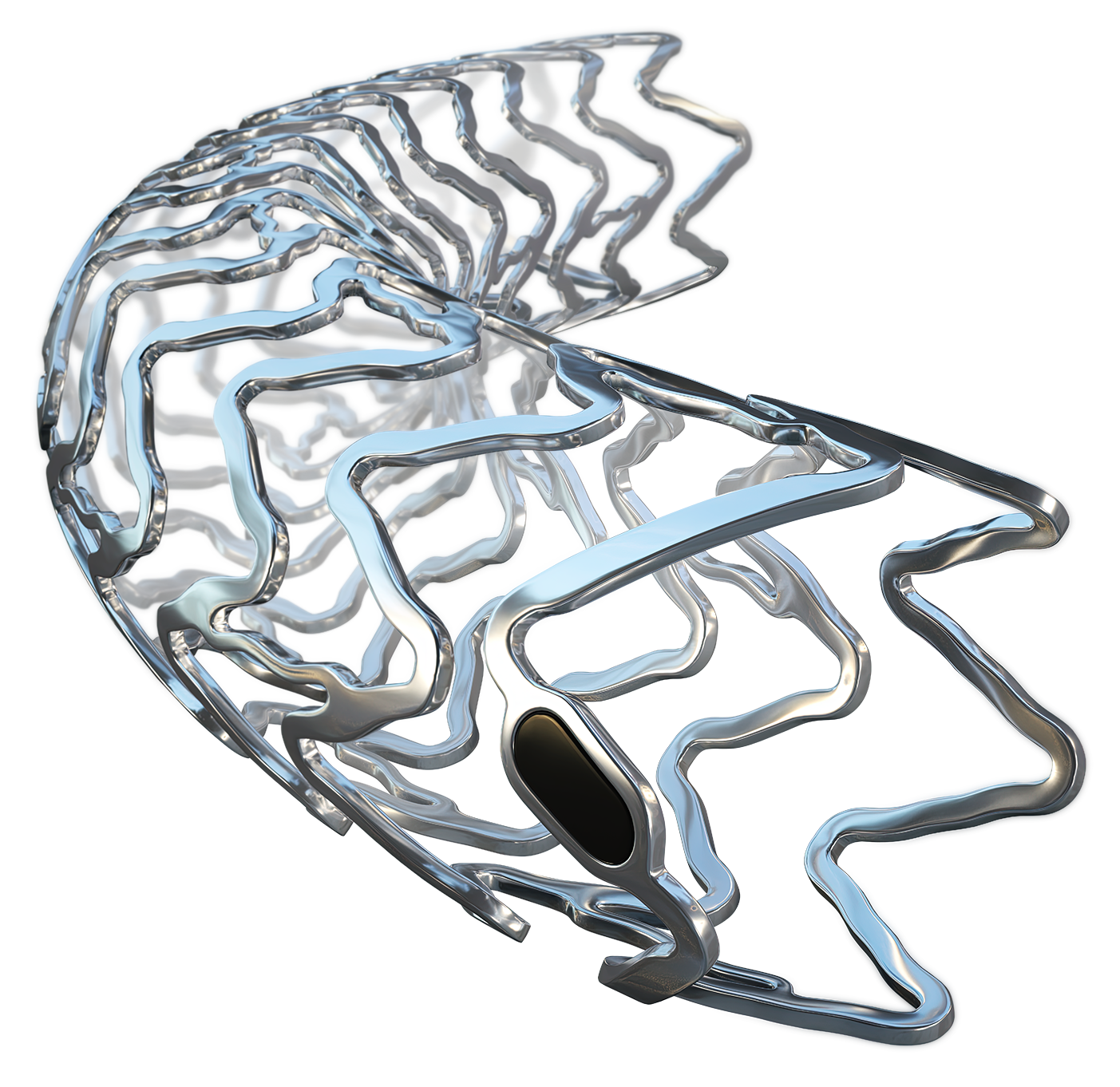
Resorbable coronary scaffolds widen coronary artery stenoses and provide temporary vessel support. Thereby, scaffolds enable unobstructed blood flow in the coronary arteries with low rates of stent thrombosis (ST) and target lesion revascularization (TLR).

Resorb
By degrading after fulfilling their scaffolding function, they offer all options of future therapies.

Product Highlights

Delivers like a DES5
Optimal vessel support6,7

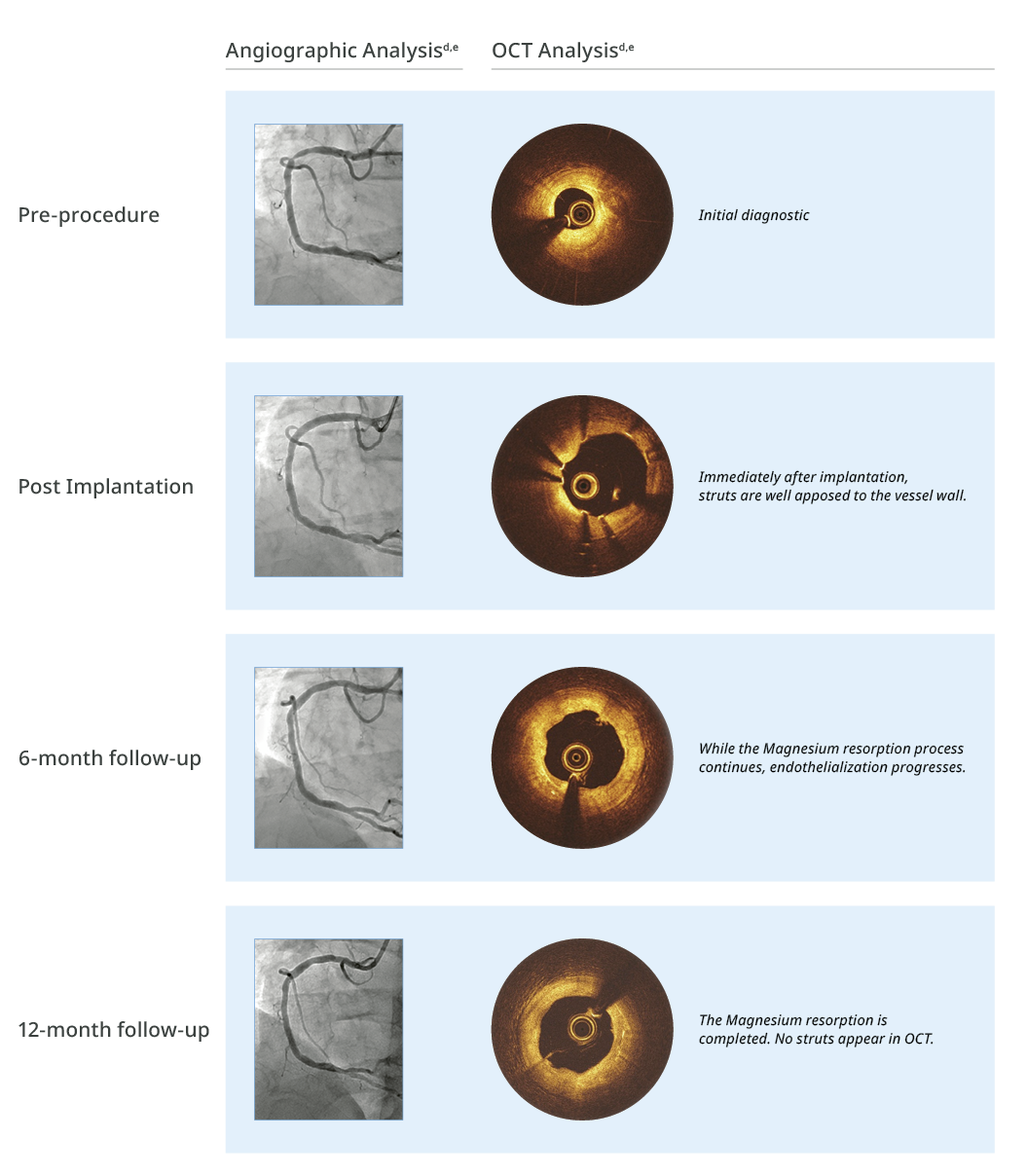
Magnesium fully resorbed after 12 months8

Excellent safety and efficacy2,3
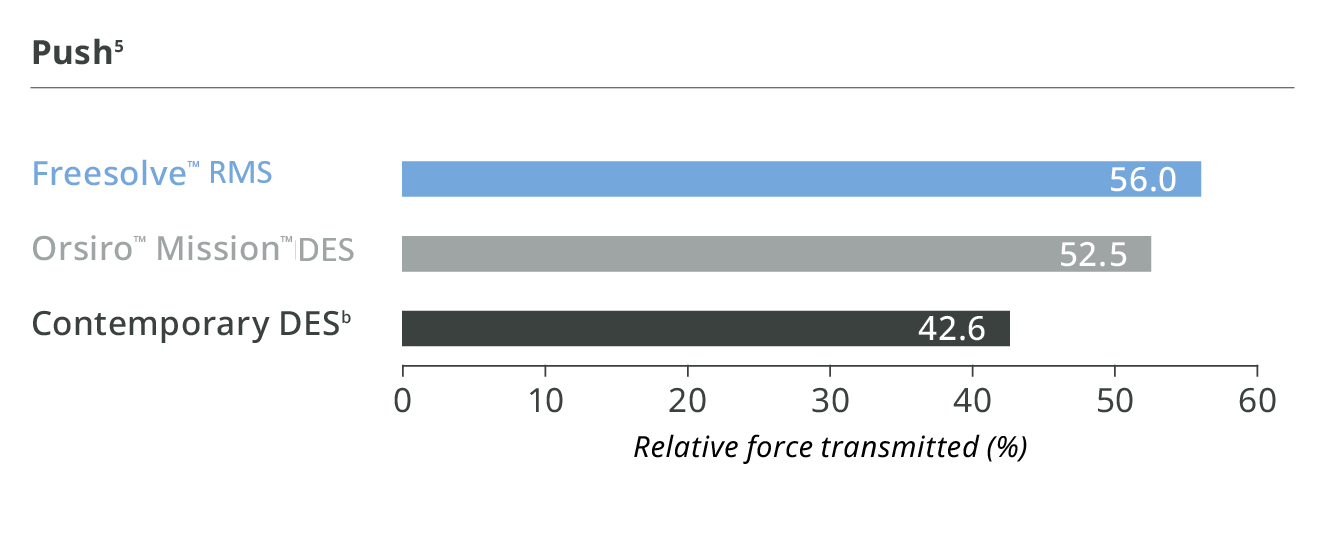
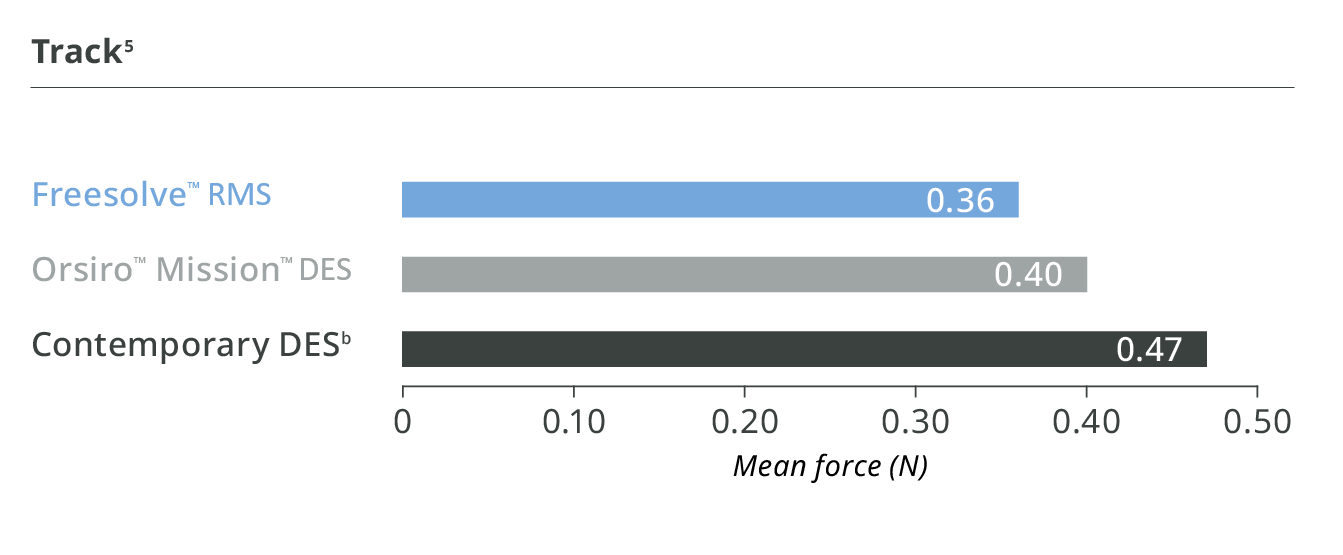
Delivers like a DES5
Push5
Better than contemporary DES
Track5
Better than contemporary DES
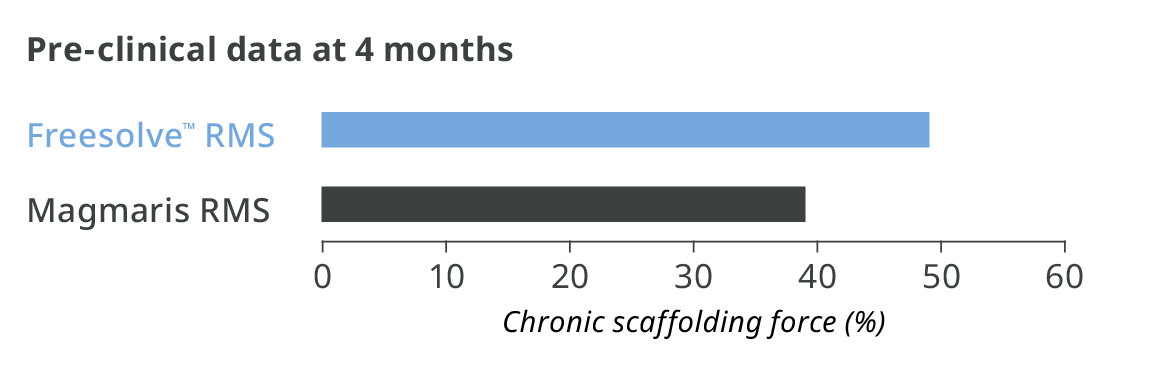
Optimal vessel support6,7

Predictable, homogeneous resorption process6
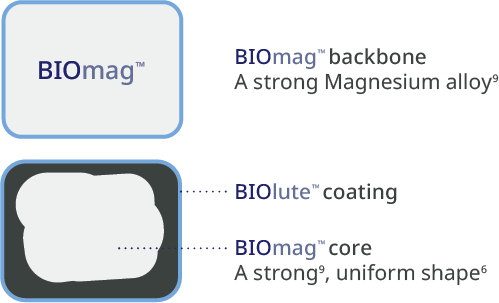
Equal resorption between struts6
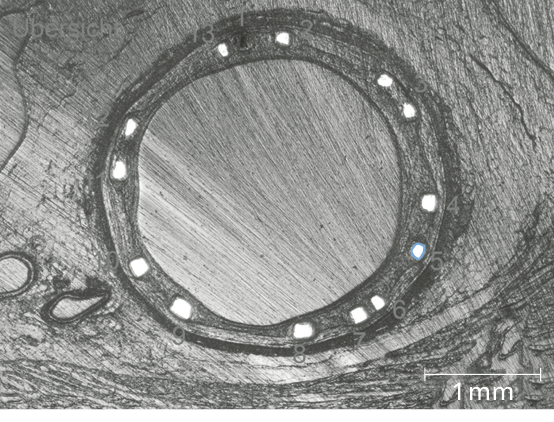
Uniform shape due to homogeneous strut resorption6
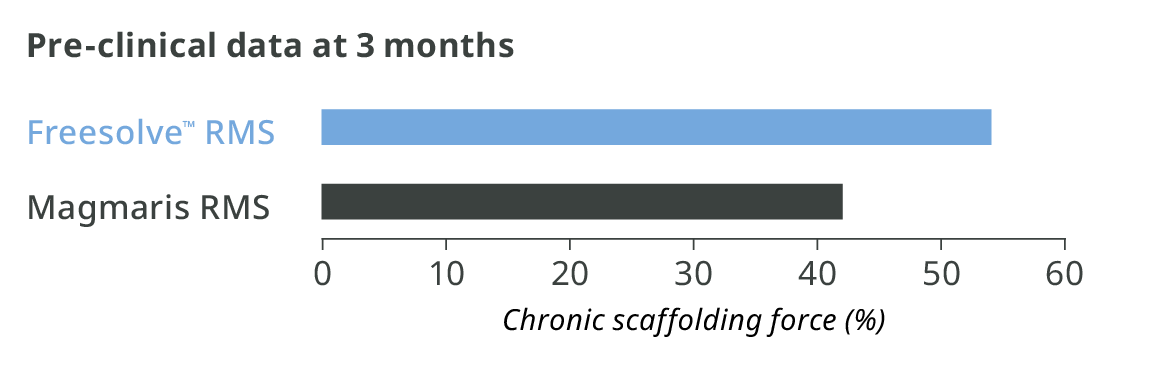
More than 3 months vessel support6,7
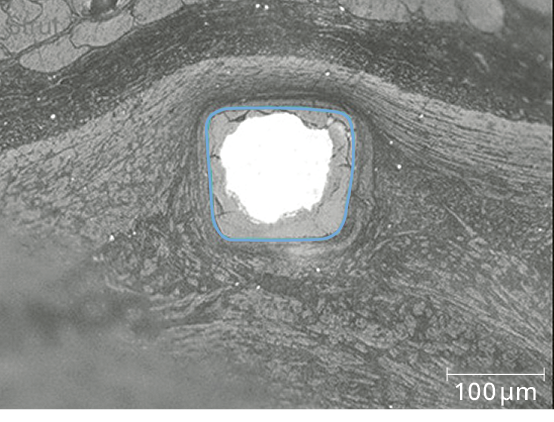
Magnesium fully resorbed after 12 months8

>99% of struts no longer visible at 12 months8
Excellent safety and efficacy2,3

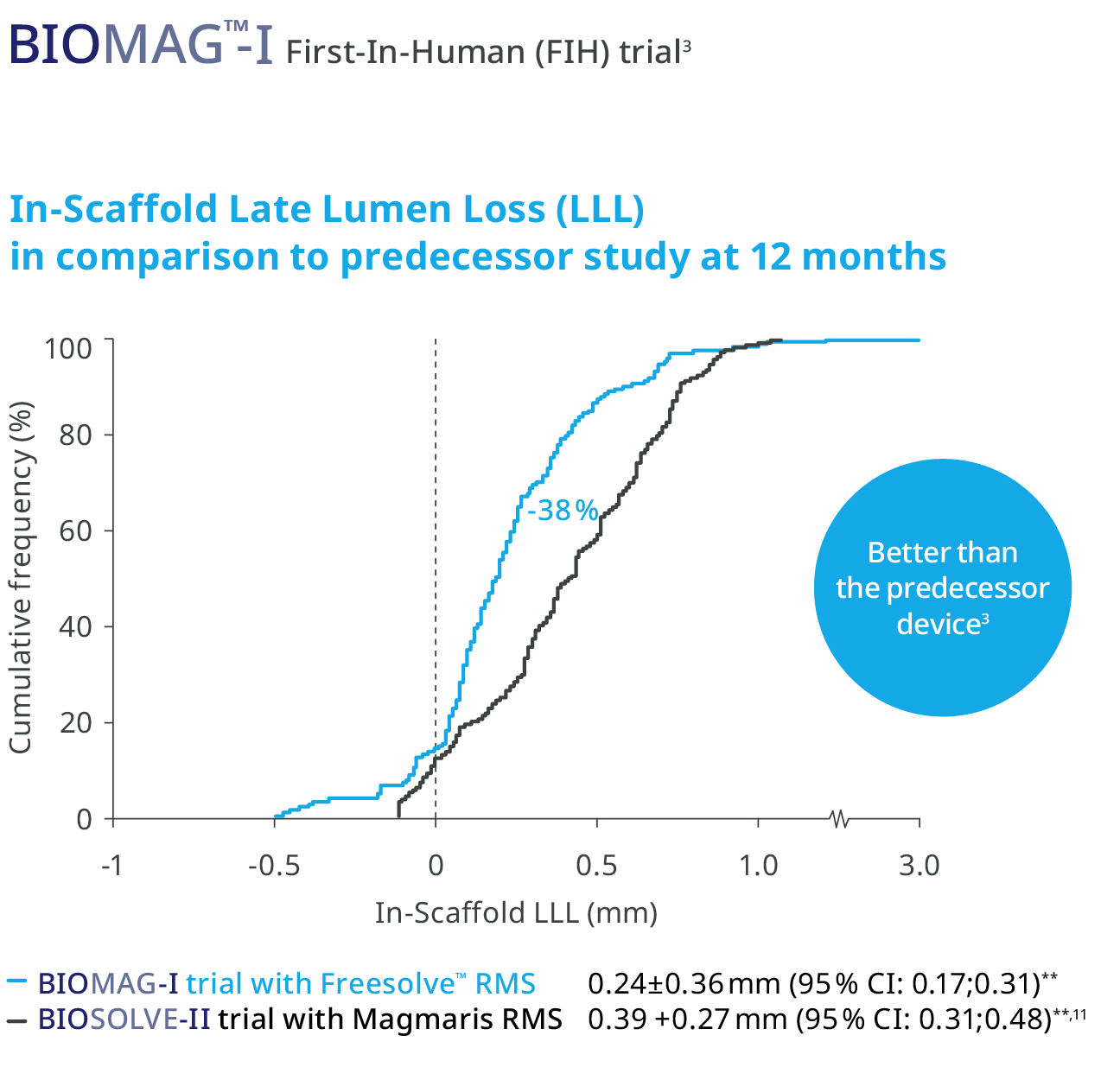
The in-scaffold Late Lumen Loss (LLL) for Freesolve RMS is on the level of a contemporary DES10

Freesolve RMS Median LLL: 0.19 mm3

Contemp. DES Median LLL: 0.18 mm10

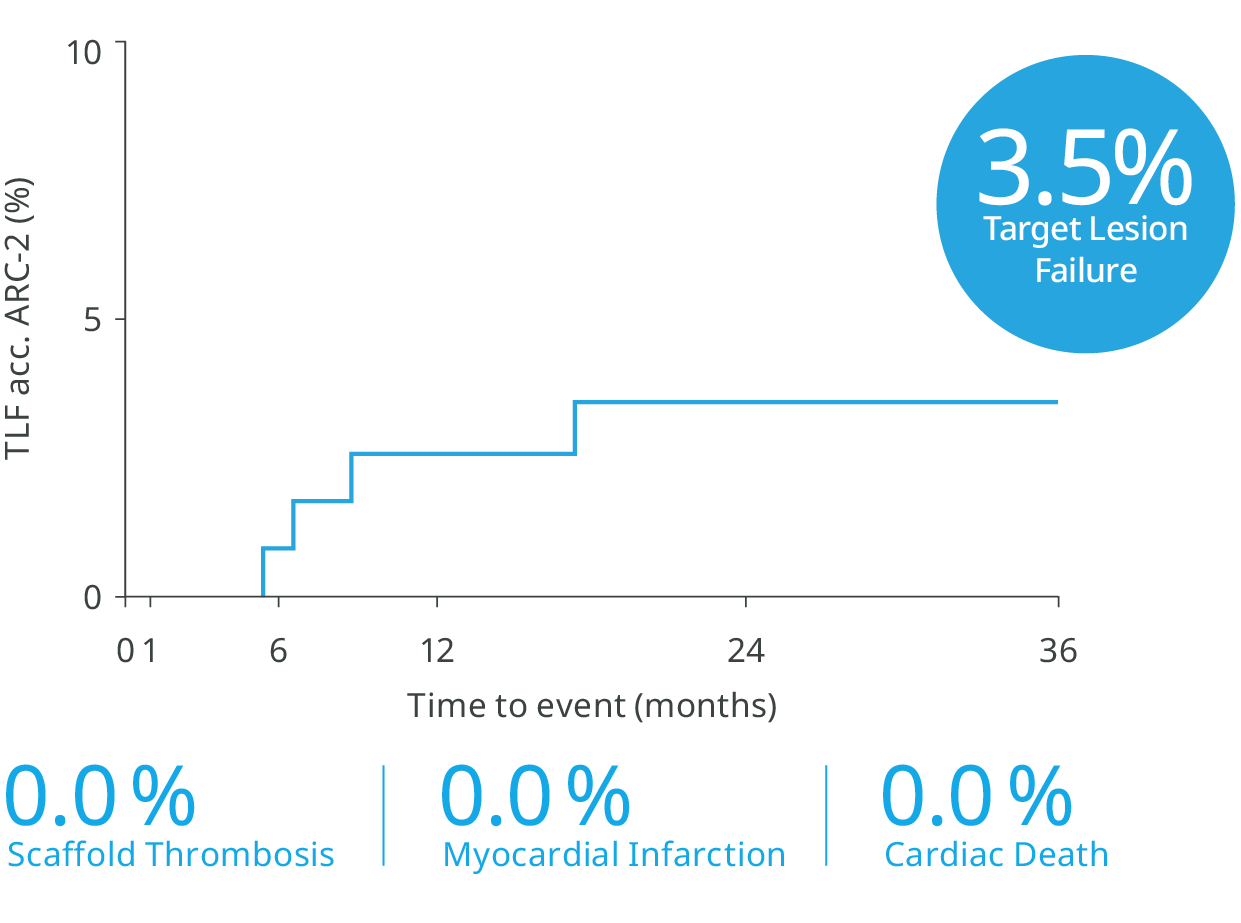
36-month outcomes confirms, Freesolve RMS delivers on its promise12

Clinical Highlights

BIOMAG-I

In-Scaffold Late Lumen Loss (LLL) for Freesolve RMS is on the level of a contemporary DES.
The prospective BIOMAG-I clinical trial assesses the angiogrpahic, clinical and safety performance of DREAMS 3G RMS of 116 patients with single de novo lesions up to two coronary arteries.

See More

Product Overview

Scaffold
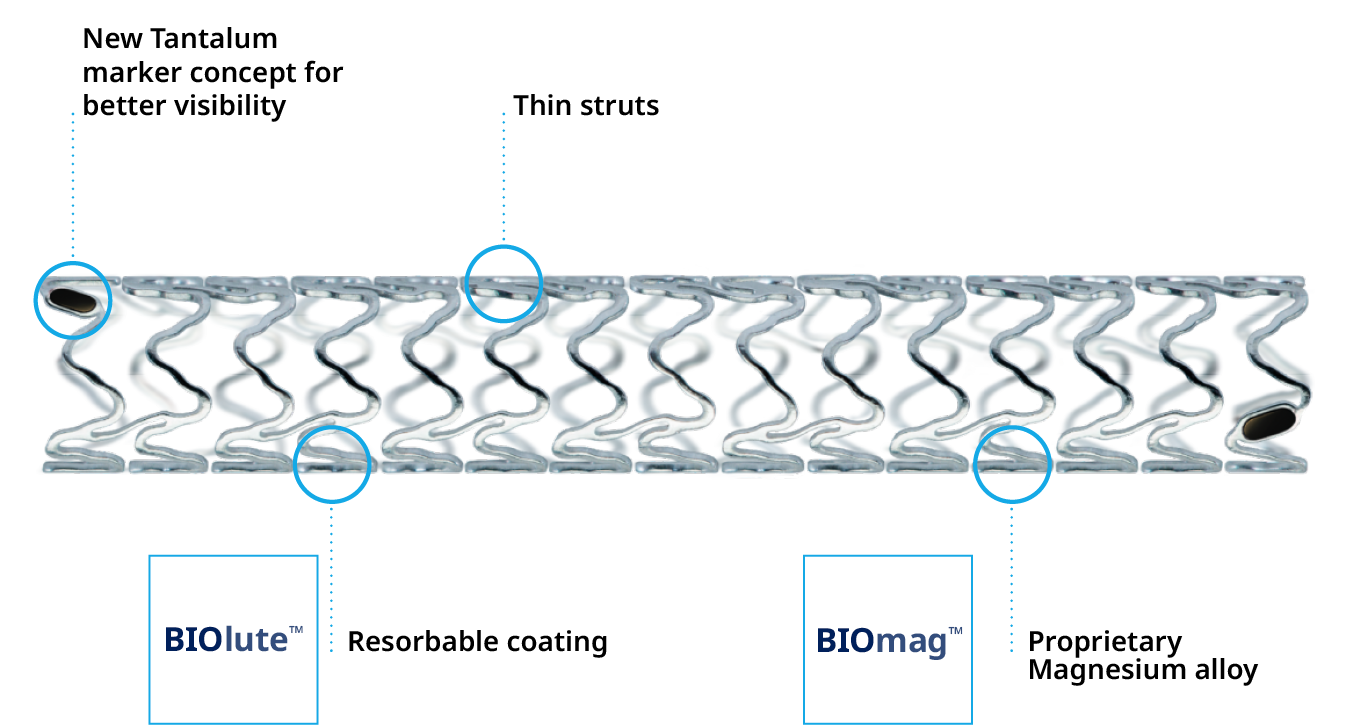
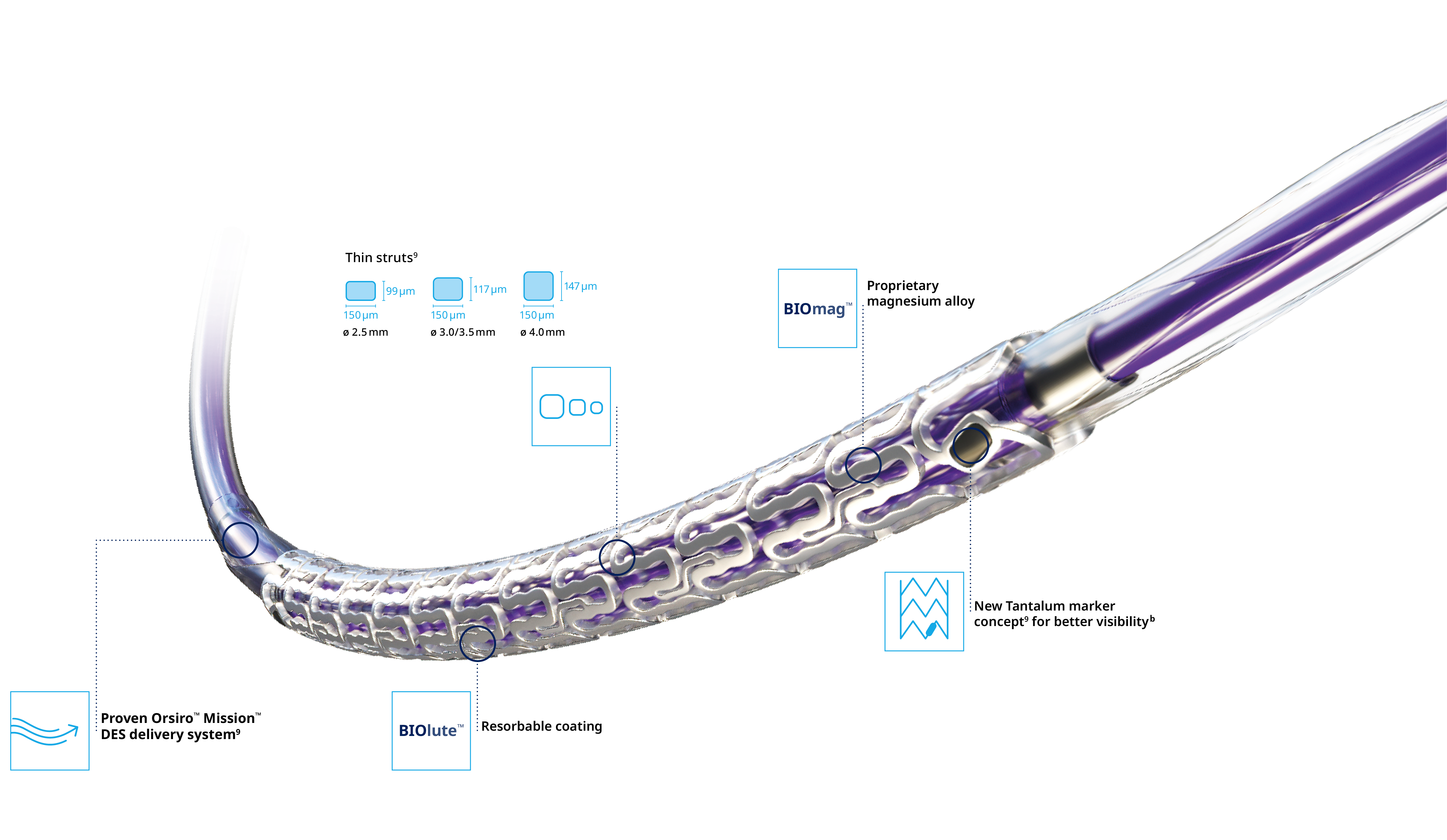
Scaffold material Proprietary BIOmag™ Magnesium alloy
Strut thickness ø 2.5 mm: 99 μm; ø 3.0/3.5 mm: 117 μm;
ø 4.0 mm: 147 μm
Maximum expandable diameter Nominal diameter + 0.6 mm
Markers One oval Tantalum marker at each end
Drug coating BIOlute™ resorbable Poly-L-Lactide (PLLA) eluting a limus drug
Delivery system
Catheter type Rapid exchange
Catheter length 140 cm
Recommended guide catheter 6F
Crossing profile ø 2.5 mm ≤ 1.3 mm; ø 3.0–4.0 mm ≤ 1.4 mm
Guide wire diameter 0.014”
Nominal pressure (NP) 10 atm
Rated burst pressure (RBP) 16 atm
Scaffold
ø (mm) (SD)
Recommended
ø (mm) (RVD)
2.50 2.50 – 2.70
3.00 2.70 – 3.20
3.50 3.20 – 3.70
4.00 3.70 – 4.20
Balloon diameter (mm)
ø 2.50 ø 3.00 ø 3.50
Nominal Pressure
(NP)
atm**
ø (mm)
10
2.52
10
3.04
10
3.54
Rated Burst
Pressure (RBP)
atm**
ø (mm)
16
2.72
16
3.29
16
3.79
*1 atm = 1.013 bar
Scaffold
ø (mm)
Scaffold
length (mm)
13 18 22 26 30
2.50 443103 443104 443105 - -
3.00 443108 443109 443110 482156 443111
3.50 443113 443114 443115 482157 443116
4.00 443118 443119 443120 482158 443121

IFU Link

Refer to this IFU link for a copy of the Instructions for Use and for a complete listing of the indications, contraindications, warnings and precautions.

References:

RMS (Resorbable Magnesium Scaffold). Target Lesion Failure (TLF) is a composite of Target-Vessel Myocardial Infarction (TV-MI), clinically-driven Target Lesion Revascularization (CD-TLR) and Cardiac Death. *99.3% resorbed at 12 months (markers are not resorbable), based on clinical data; **based on QCA paired data. a. Indications as per IFU; b. BIOMAG-I case in normal cine projection, courtesy of Prof. Michael Haude, Rheinland Klinikum Neuss GmbH, Lukaskrankenhaus, Neuss, Germany; c. Xience Sierra DES (Abbott); d. Angiographic and OCT Analyses derived from two different BIOMAG-I cases, courtesy of Prof. Michael Haude, Rheinland Klinikum Neuss GmbH, Lukaskrankenhaus, Neuss, Germany; e. The 4P protocol was respected.

1. Data on file, benchtest data; 2. Haude M. et al., the Lancet eClinicalMedicine 2023;59: 101940; 3. Haude, M. et al., EuroIntervention 2023;19:1-1 published online May 2023; 4. Seguchi M et al. OCT-Analysis 12M, presented at ESC 2023; 5. Data on file, Benchtest data: Freesolve in comparison to Orsiro Mission and Abbott Xience Sierra; 6. Based on pre-clinical data, Seguchi, M. et al., EuroIntervention 2023;18-online publish-ahead-of-print January 2023; 7. Data on file, in comparison to predecessor device; 8. Based on intravascular OCT analysis of the BIOMAG-I trial presented by Dr. M. Seguchi at ESC 2023; 9. Data on file; 10. Byrne, RA. et al., Eur Heart J 2015;36:2608-2620; 11. Haude M., et al. Sustained safety and performance of the second-generation drug-eluting absorbable metal scaffold in patients with de novo coronary lesions: 12-month clinical results and angiographic findings of the BIOSOLVE-II first-in-man trial. Eur Heart J. 2016;37:2701-9; 12. Haude M. et al., Clinical outcomes of the third-generation resorbable magnesium scaffold for coronary artery lesions: three-year results of the BIOMAG-I study. EuroIntervention 2025;21:e1-e3.

BIOSOLVE-II and BIOMAG-I based on Kaplan-Meier failure estimate analysis.

Teleflex, the Teleflex logo, BIOlute, BIOmag, BIOMAG, Freesolve, Magmaris, Orsiro and Orsiro Mission are trademarks or registered trademarks of Teleflex Incorporated or its affiliates in the U.S and/or other countries. Refer to this IFU link for a copy of the Instructions for Use and for a complete listing of the indications, contraindications, warnings and precautions. All other names are the trademarks or registered trademarks of their respective owners. Information in this material is not a substitute for the product Instructions for Use. Not all products may be available in all countries.

© 2025 Teleflex Incorporated. All rights reserved.